The current ‘polycrisis’ is affecting the way people spend their money, driving a search for meaning beyond the simple transaction. In this context, it’s unsurprising that 64% of consumers say “experiences create more memories than luxury items” (Source: Financial Times), while 81% of American consumers view travel as a healing activity (Source: Expedia). This change in perception has given rise to a new form of travel focused on personal transformation and experiences that encourage cultural connection.
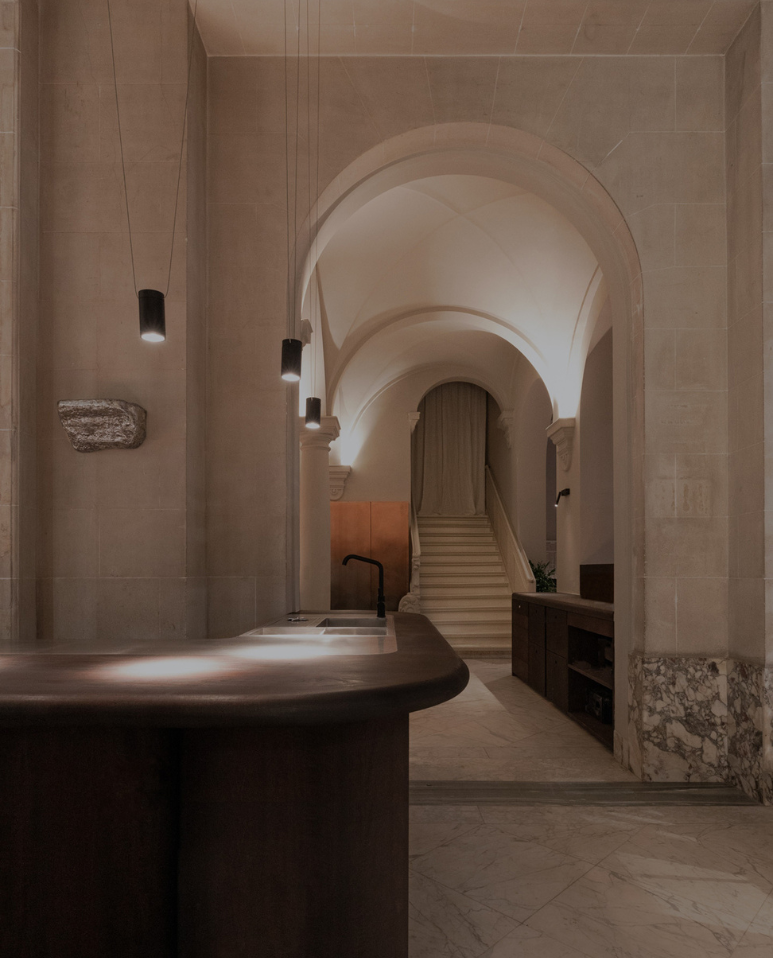
The search for meaningful travel filled with discovery has become essential for tourists. Deep cultural connections arise as a driving force behind the hotel industry’s transformation in response to the growing demand for experiences that go beyond conventional accommodation. With 64% of luxury consumers prioritising experiences for the unique memories they create over material goods (Financial Times, Expedia), hotels are positioning themselves as bridges towards cultural and educational wealth in destinations, facilitating a more enriching and meaningful form of tourism. From rural excursions to immersions in the local culture, the data show travellers look for experiences that spark a culture shock. For example, 35% want to find the weirdest delicacy in the world (Source: Booking).
Lastly, the commitment to sustainability and social responsibility has consolidated its position as a driver of change, demonstrating an alignment between travellers’ personal values and their consumption choices. “It’s not enough to simply contaminate less. Leading companies are actively restoring the places where they operate, focusing on designing a business that generates positive social and environmental benefits,” explains Jeremy Smith, sustainable tourism consultant.
“There is a growing desire to establish meaningful connections to the destinations visited, including interactions with everything local: culture, heritage, music, gastronomy… Hotels must commit to the local community and become a point of attraction that generates new sources of income.”
Francisco López Córdoba, Four Seasons
Hotel brands are becoming bastions of culture across the world. The commitment to maintain symbolic places of interest over time will help the hotel to remain culturally relevant. In addition, this investment in monuments and artistic pieces can be a key strategy when expanding the hotel’s own assets and creating experiences beyond those focused on the hospitality sector.
This renewed appreciation for time and the history behind each experience will change consumers’ identities, especially consumers of luxury, who will come to be considered collectors concerned with something more than mere possession and who expect luxury to signal their status, not through excess, but by acting as authentic guardians of craftsmanship and tradition.
Spaces connect with local cultural expression through the relationship that is created via a craftsmanship that attracts consumers, who revalue and opt for more socially aware experiences.
The space helps to tell the history of a destination or reinsert the brad¡nd’s heritage via decorative detail the connect with authenticity, lifestyle and emotion.
With a modern outlook, hospitality spaces are overhauling the city’s imagination through spatial projects that connect with history and tradition.
The connection with the world of art becomes a key piece in spatial design.
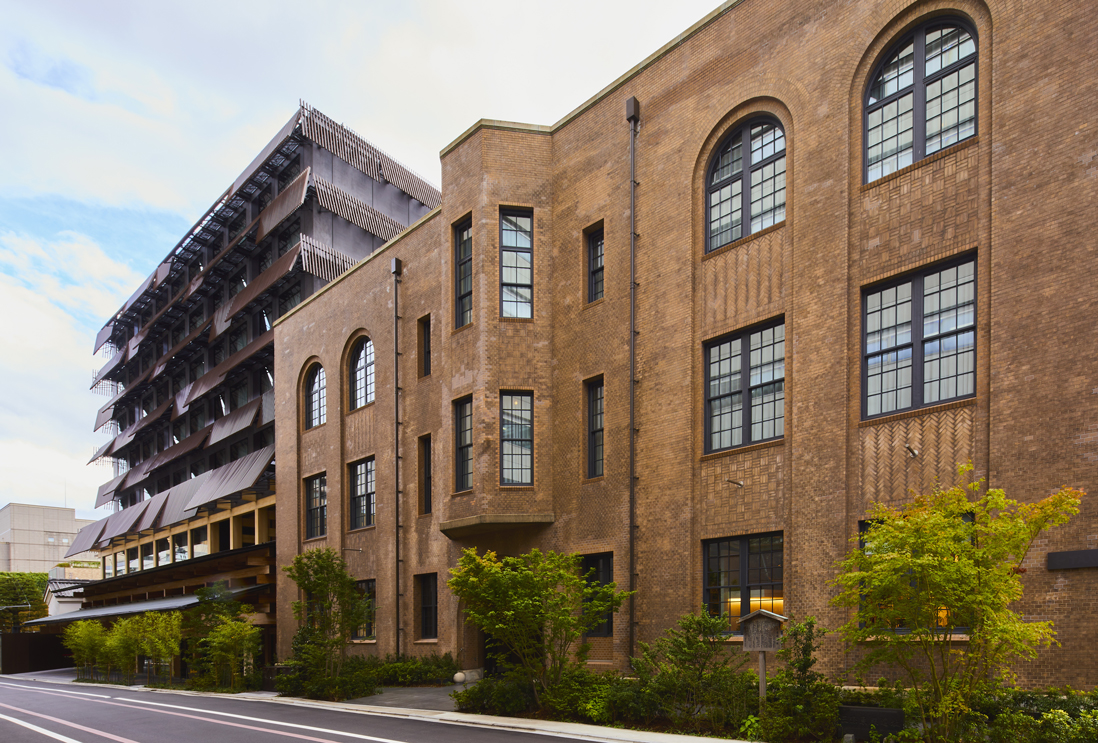
When Ace Hotel Kyoto opened its doors in the middle of 2020, guests could enjoy the merger of the American brand Ace with the traditional Japanese artistry of Kengo Kuma in a space that pays tribute to timeless craftsmanship and authenticity.
Guests are welcomed by a ceramics mural on the façade of the Ace Hotel building in Brooklyn, work of the modernist Stan Bitters. The lobby bar gives way to the restaurant, As You Are, which serves local craft beer, classic cocktails and global cuisine with a mosaic by the artist Isaiah Zagar acting as the backdrop. Niki Tsukamoto curated the brand’s first large-scale fibre art programme with a group of 36 textile artists, the majority locals, to create original pieces for the hotel’s bedrooms, communal areas and gallery, which hosts rotating exhibitions.
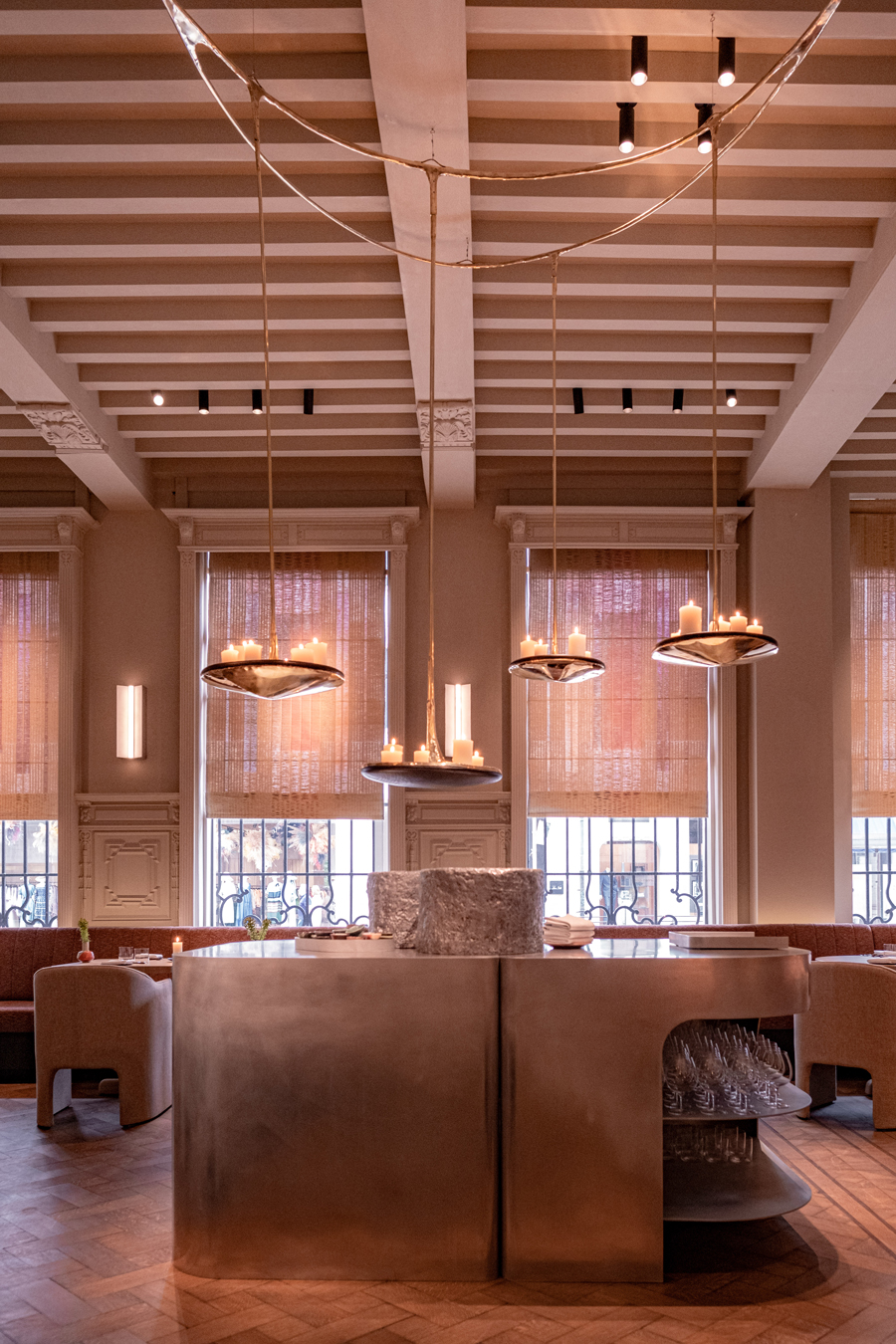
Designed by Space Copenhagen, Blueness restaurant in Antwerp offers a unique culinary experience where interior design and architectural history intertwine. The palette of dark colours and rich materials reflects the Japanese aesthetic, while the building’s columns and arches, originally designed by the architect Joseph Hertogs in 1905, are kept intact. “The design process was enriched by the fragmented history of this 17th century Renaissance building,” the designers explain.
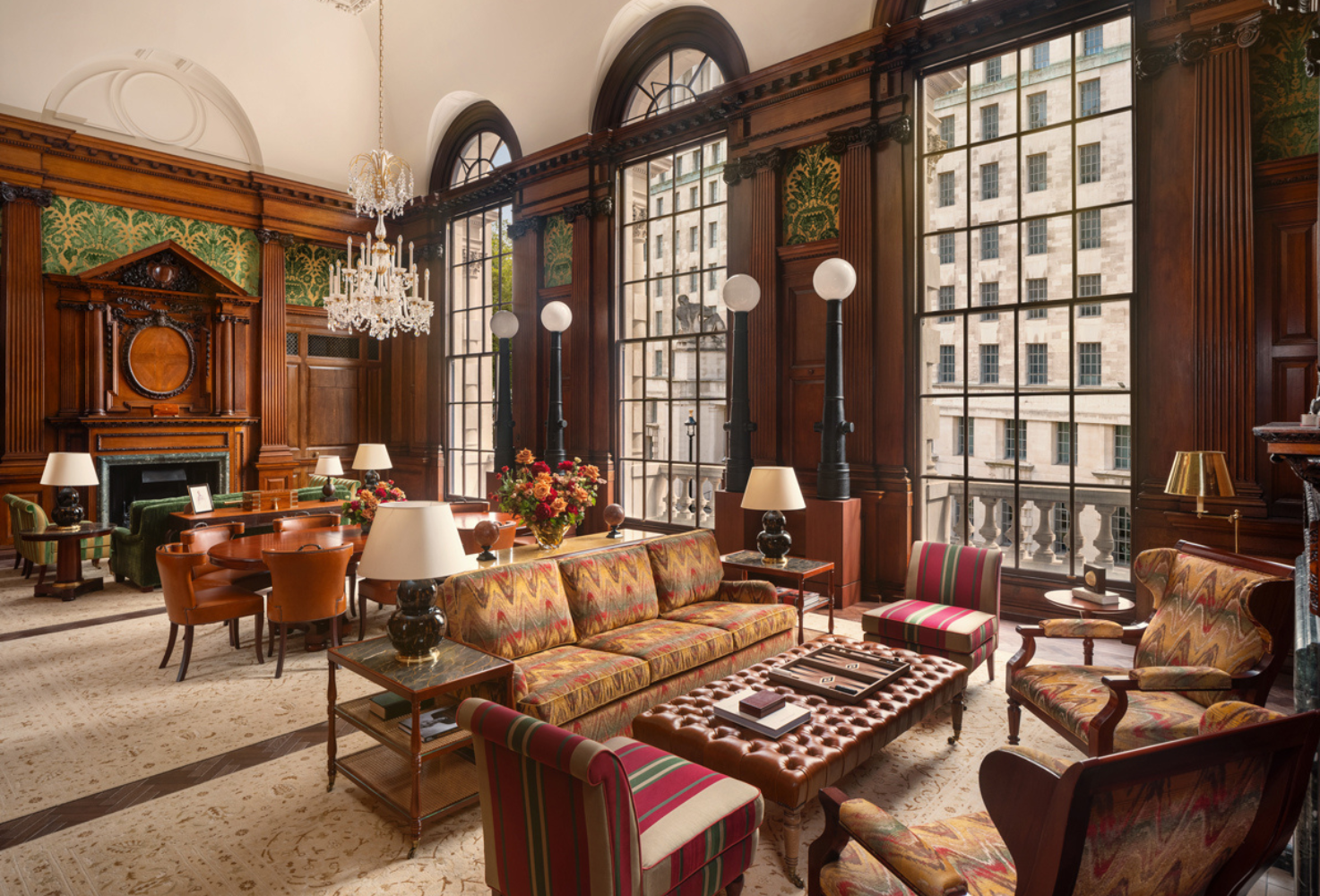
In London, the Old War Office, formerly used by Winston Churchill and other notable statesmen and spies, has been transformed into the luxury hotel The OWO by Raffles Hotels & Resorts of the Hinduja Group.
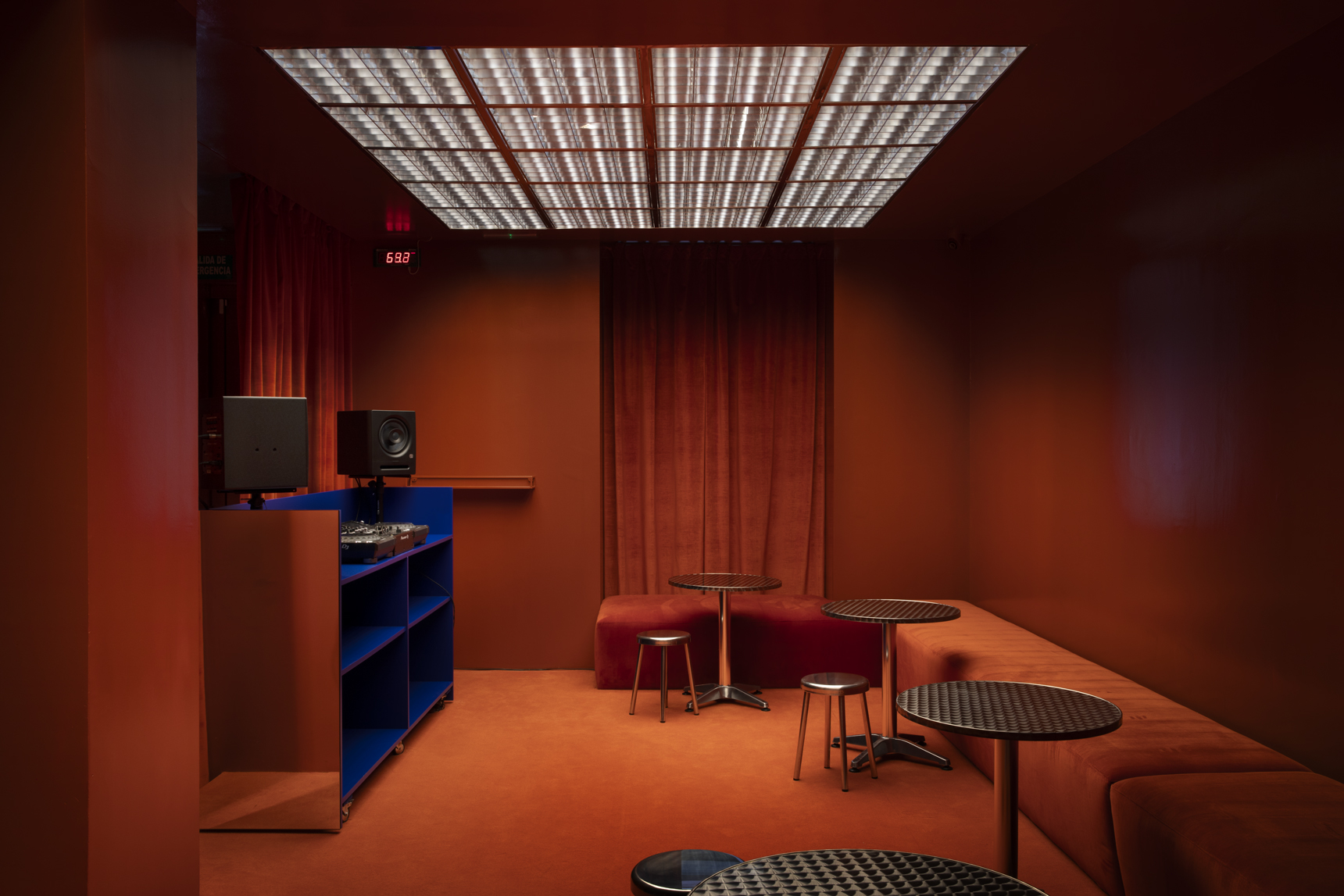
Gilda Haus by CODOO STUDIO is an establishment in Madrid that combines the traditional tavern with classic cocktails and electronic music.
Establishment photography: Germán Saiz. Design: CODOO STUDIO. Establishment: Gilda Haus




