According to Ivy Ross (vice president of hardware design at Google) and the neuroscientist Susan Magsamen (founder of the International Arts + Mind Lab), art can be a tool for health. With the help of functional magnetic resonance scanners, Ross and Magsamen explore how neuroart, together with design and architecture, can stimulate the senses and creativity, inducing states of happiness and well-being. They highlight its therapeutic potential for treating issues like depression and anxiety, and underline its importance in the balance between personal life, work life and leisure time.
A greater concern for mental health is also having an impact, on the one hand, on human resource policies, and, on the other, on spaces. In the United Kingdom alone, one in every four people in the general population, and one in every six workers, can suffer from a mental illness, which equates to more than five million workers. 84% of employees have experienced symptoms of poor mental health in the years in which work was a contributing factor (Source: Deloitte).
The plethora of open-plan programmes in offices reflects a more open, more collaborative work culture, but it’s also caused significant friction with concentration. Only 29% of workers say they can concentrate perfectly in open spaces, compared with 41% who said so in 2015 (Source: Oxford Economics). This study discusses how the removal of walls has led to a noise epidemic that has made concentration difficult in workspaces.
“Offices have shifted from focusing on the corporate brand to prioritising the end user’s well-being. Aspects like the connection with nature, the presence of outdoor spaces and the inclusion of green elements are key to improving well-being. The office is now merging with the urban or natural environment to become a more enriching workspace for employees.”
Maria Comas, Batlleiroig
The trend of creating work spaces that employ neuroaesthetics and biophilia to optimise well-being and human performance has several significant consequences for interior design and architecture. The first: using neuroaesthetics to create the right environment for performing different kinds of work, including concentration, creativity and collaboration, is becoming a starting point for this new form of management in office design.
Another consequence is the inclusion of silent and meditation zones within workspaces. These don’t need to be literally integrated, but they do need to consider that concentration and isolation can be necessary at specific times. When facing the challenge posed by open-plan offices in terms of distractions and noise, the conscious design of areas dedicated to silence and introspection not only encourage concentration, but also serve as an escape valve for stress.
In addition, the inclusion of technologies that facilitate adaptive and customisable environments becomes crucial. This includes lighting systems that copy the day’s natural cycles and furnishings that can be adjusted as required, thereby allowing each employee to modify their space depending on their specific tasks or mood, leading to improved efficiency and job satisfaction.
Since well-being plays a key role in the workplace, the need for designated rest areas, or a third space away from the desk, have become key aspects.
A third of employees around the world prefer the privacy working from home affords them. Architects and designers must include new levels of flexibility to allow autonomous work in communal offices, such as controllable lighting, acoustics and privacy screens.
Acoustic techniques, such as zoning, are used alongside designer products to reduce noise and also provide comfort.
Design that maximises the use of natural light in workspaces, improving employee mood and productivity while regulating circadian rhythms.
Integration of plants and indoor gardens to purify the air, reduce stress and increase general well-being, encouraging a direct connection with nature.
Ceiling height has a direct impact on the type of work. Snugger spaces appear to favour analytical thinking and attention to detail, which is why an operating theatre must have low ceilings to ensure the surgeon is fully concentrated on the task at hand.
It would appear that curved furnishings with soft edges invoke more of a sense of relaxation and calm than those with sharp edges.
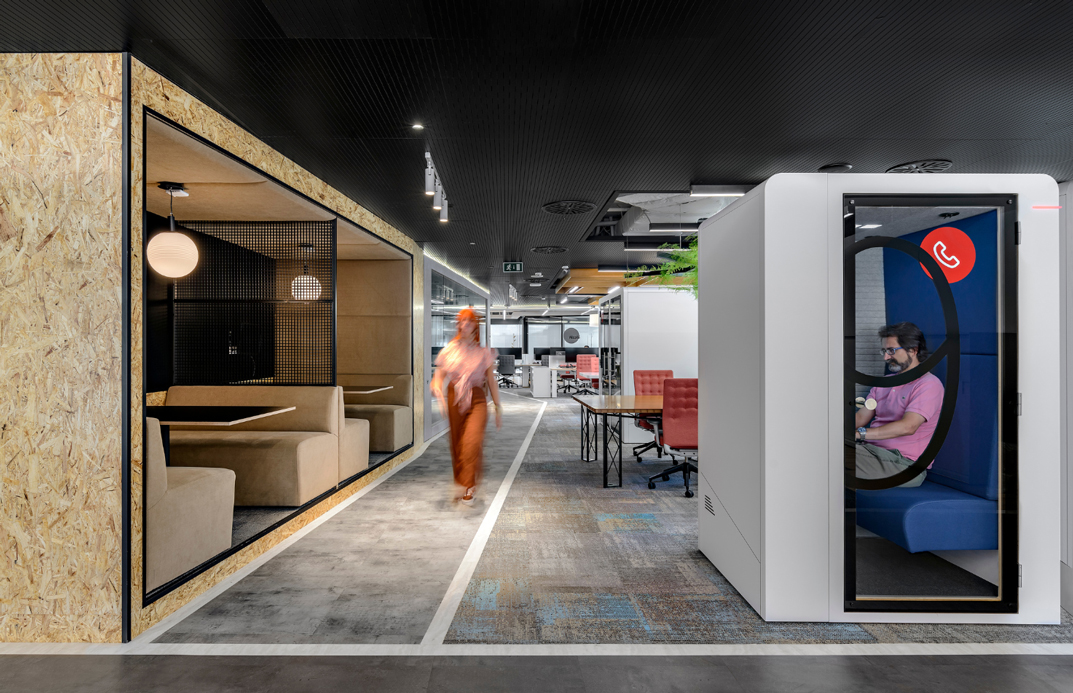
The design of the JLL offices in Madrid is infused with concepts like flexibility, diversity, inclusion and sustainability. The work of the architectural studio Tétris, the goal is for this space to be a place focused on people’s well-being, with spaces dedicated to the different ways of working and with plenty of vegetation to bring the outdoors inside and generate a more welcoming, natural environment.
Photography: José Parreño
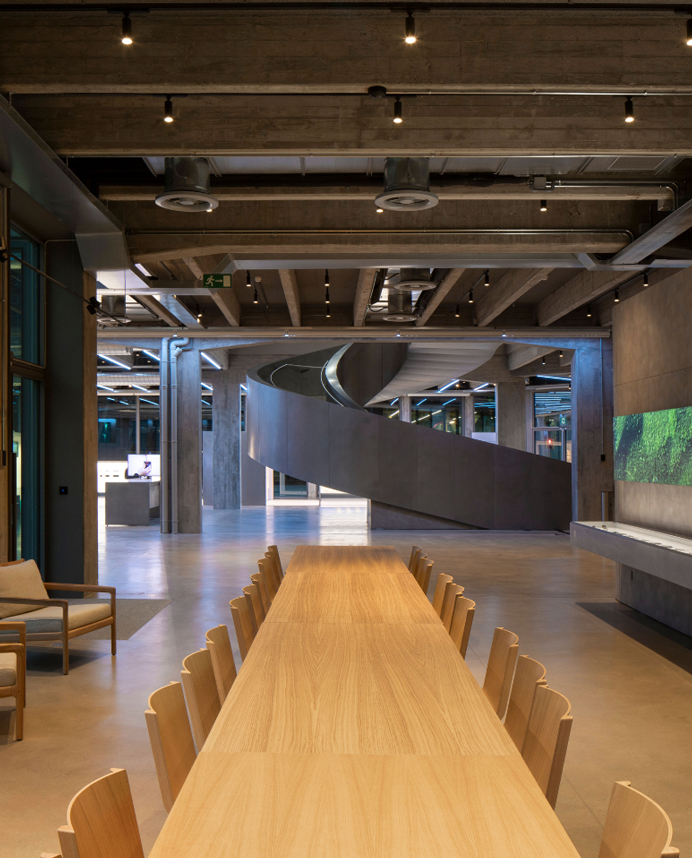
The new Simon offices in Barcelona, completed by b720 Fermín Vázquez Arquitectos, are focused on well-being and interaction. The furnishings, layout and meeting areas have been designed with soft tones and natural materials to offset the coldness and rigidity of concrete. Highlights include meeting cabins and silent zones to promote interaction and collaboration in some cases, and privacy in others.
Photography: Rafael Vargas
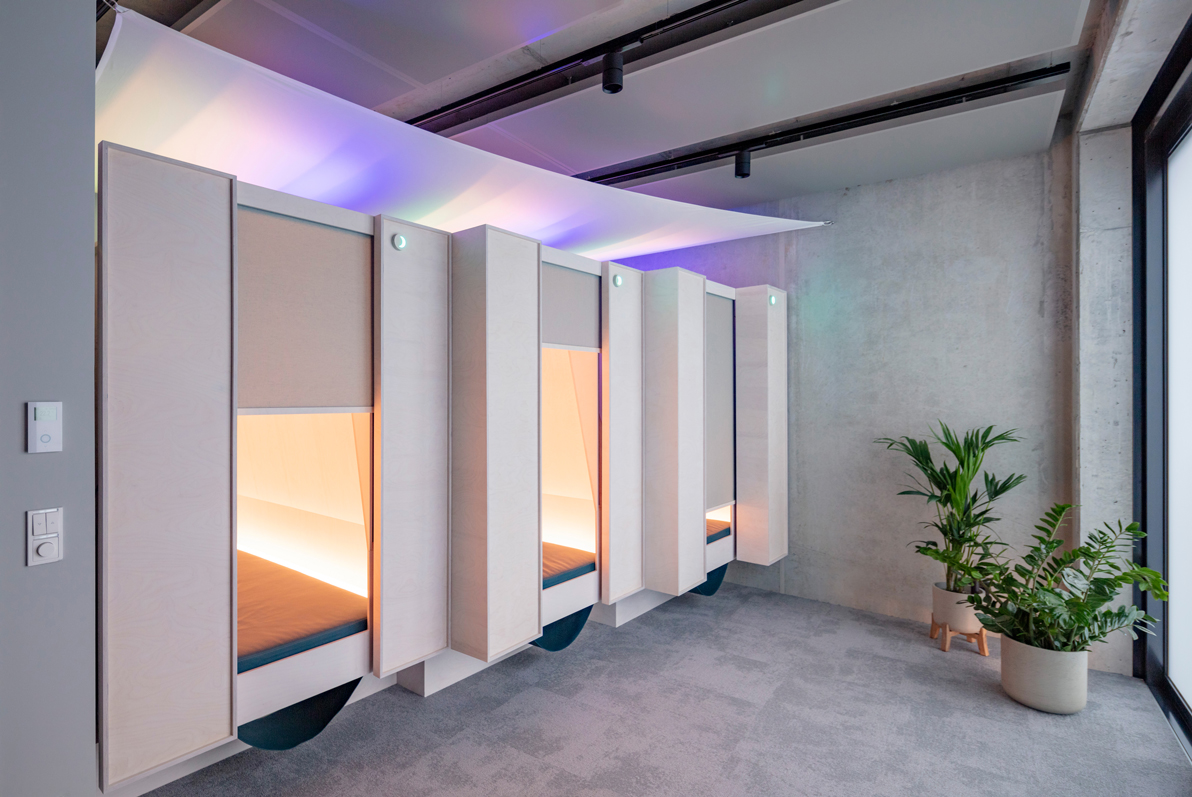
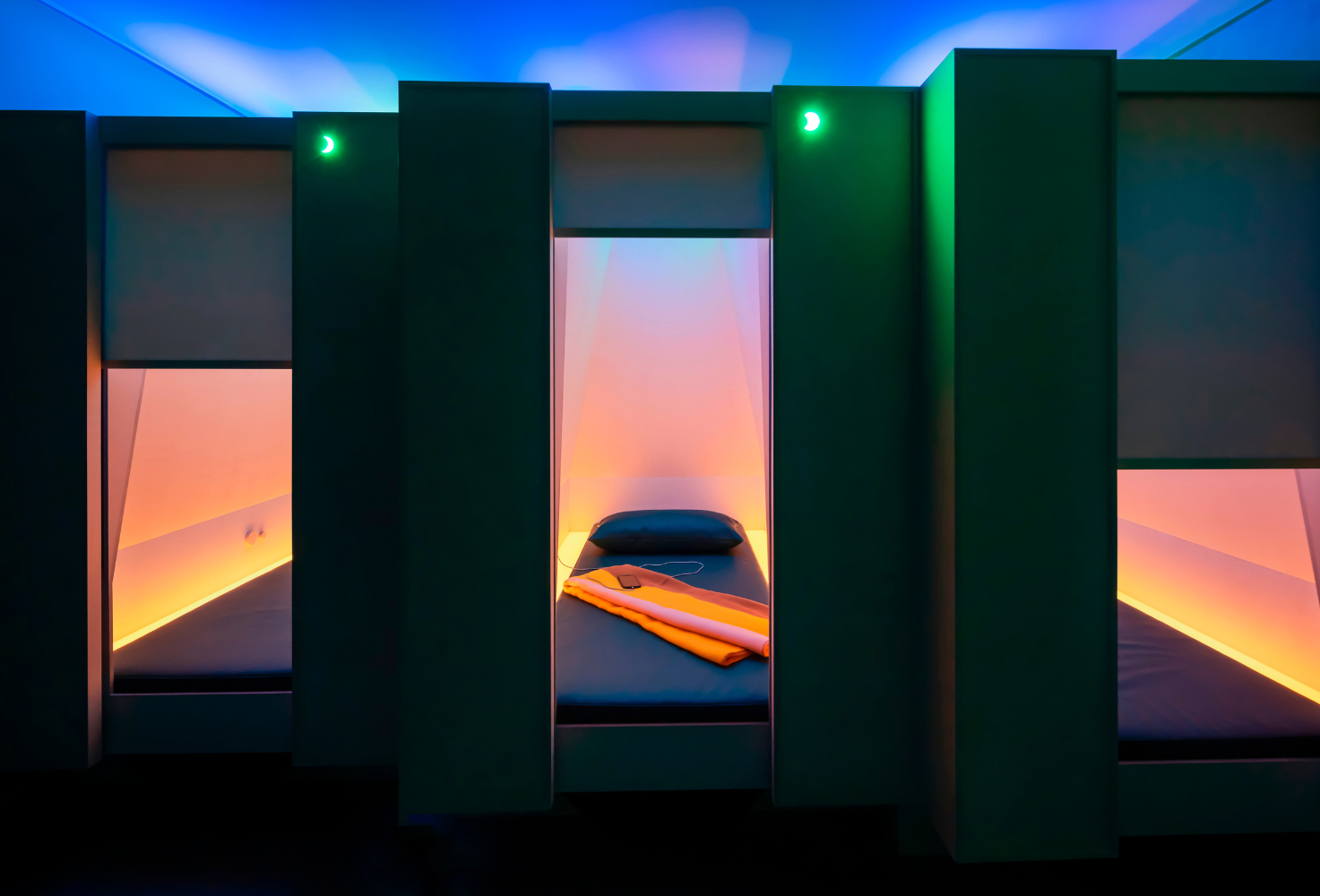
Contentful office in Berlin. It was designed after consulting employees. Designed by Toi Toi Toi Creative Studio, it has nap cabins with a customised design and chromotherapy to ensure relaxation.
Photography: Koy+Winkel
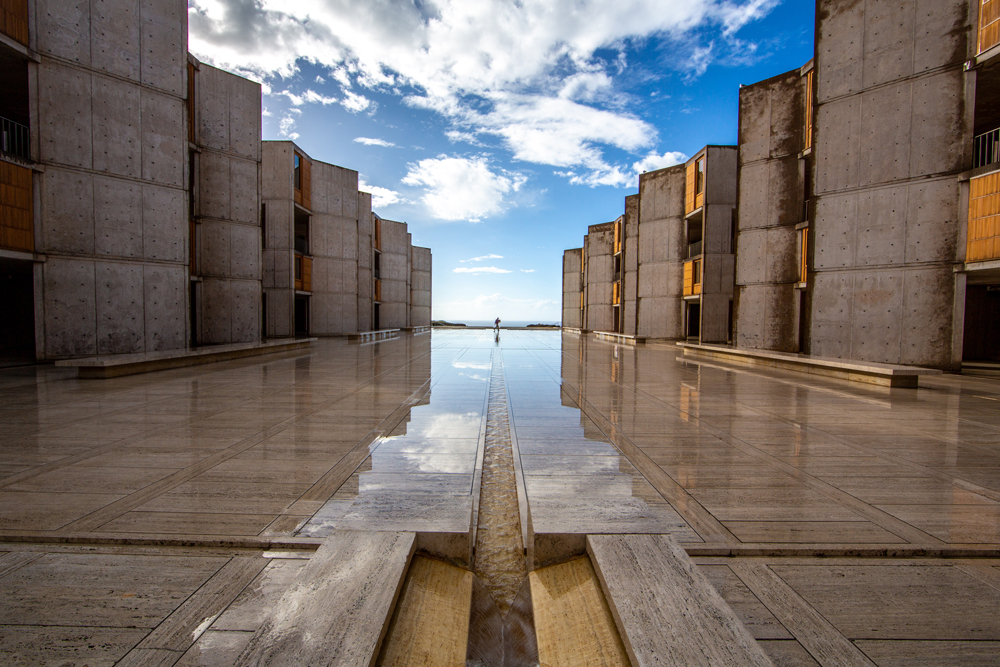
The scientist Jonas Salk managed to overcome a roadblock in his research during a trip to Italy, where the architecture had a massive impact on him. This experience led him to collaborate with the architect Louis Kahn to create The Salk Institute. The result is a symbol of integration with nature and the advancement of serenity, collaboration and innovation. Today, it has been recognised as an architectural wonder and is a renowned research centre.
Photography: Salk Institute




