


2
2
What began as a move towards collaboration and spontaneity has resulted in a crisis of concentration: open spaces, constant noise and a culture of interruption that undermines productivity. A recent study found that the hustle and bustle of modern offices can cause a 32% drop in employee well-being and a 15% decline in productivity (Source: Researchgate).
The home has emerged as a haven for knowledge work, offering levels of focus and autonomy that many offices cannot match. Remote working has reshaped our understanding of what constitutes an effective workspace – and raised employee expectations. The office, as we knew it, is no longer enough.
As in-person work returns, we find ourselves at a crossroads. The office cannot be merely a space for meetings or socialising – it must once again support both collaboration and deep, focused work.
Professional expectations have evolved, and the belief that “you work better at home” could affect talent retention if offices do not offer appropriate conditions. In recent years, home working innovations – better time management, fewer distractions – have led many to question the relevance of the traditional office.
Simultaneously, the rise of open-plan layouts with unassigned seating has altered how we conceive of workplace environments. This model, designed to encourage dynamism, flexibility and a redefined corporate culture, translated into open spatial plans that prioritised visibility and constant interaction. However, its implementation has brought unforeseen issues: ambient noise, lack of privacy, difficulty in finding available spaces and a growing sense of disconnection during tasks requiring maximum concentration.
In recent years, the need for focus has been overshadowed by the emphasis on collaboration. Yet data clearly shows that employees still want to work independently in spaces that support deep thinking. A recent XY Sense Workplace report highlights that while collaborative areas remain popular (32% usage), personal workstations also see substantial use (around 26%). In fact, nearly half of shared office desks are used for less than one hour per day, while 30% of individual desks are used for more than three hours (Source: Workplace Intelligence). This indicates that while employees appreciate collaborative zones, they also need individual spaces to concentrate.
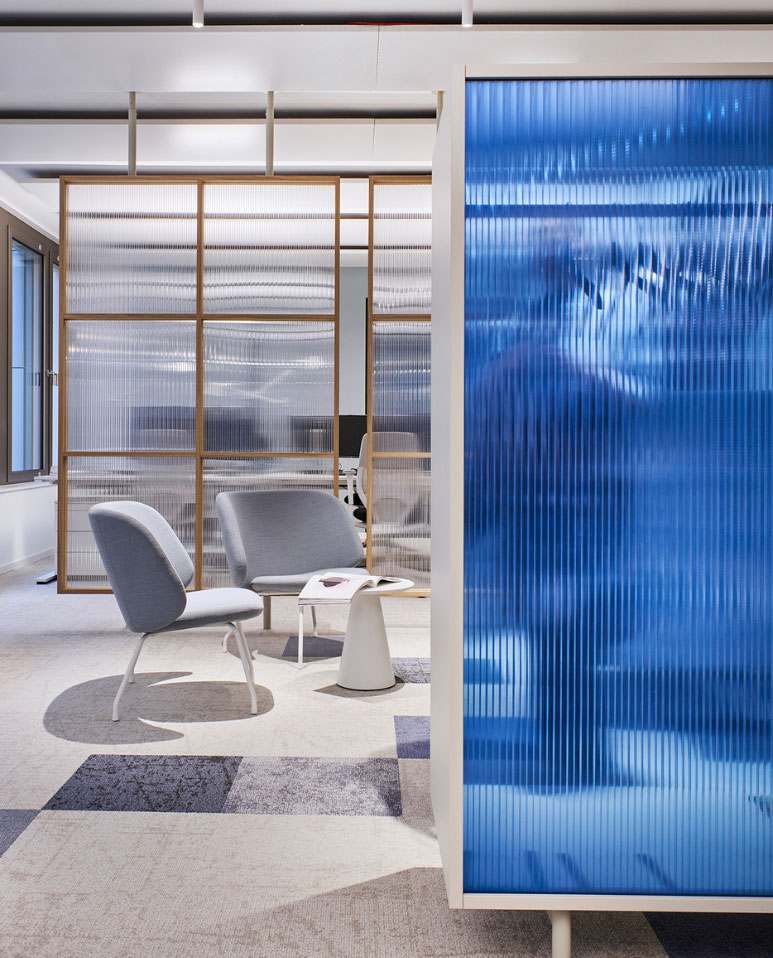
“The era of traditional open-plan offices is over. What we now need are flexible ‘work lofts’: smaller, more agile spaces that seamlessly combine zones for collaboration and retreat. It’s about redefining personal space within a shared environment.”
Susanne Brandherm, brandherm + krumrey interior architecture
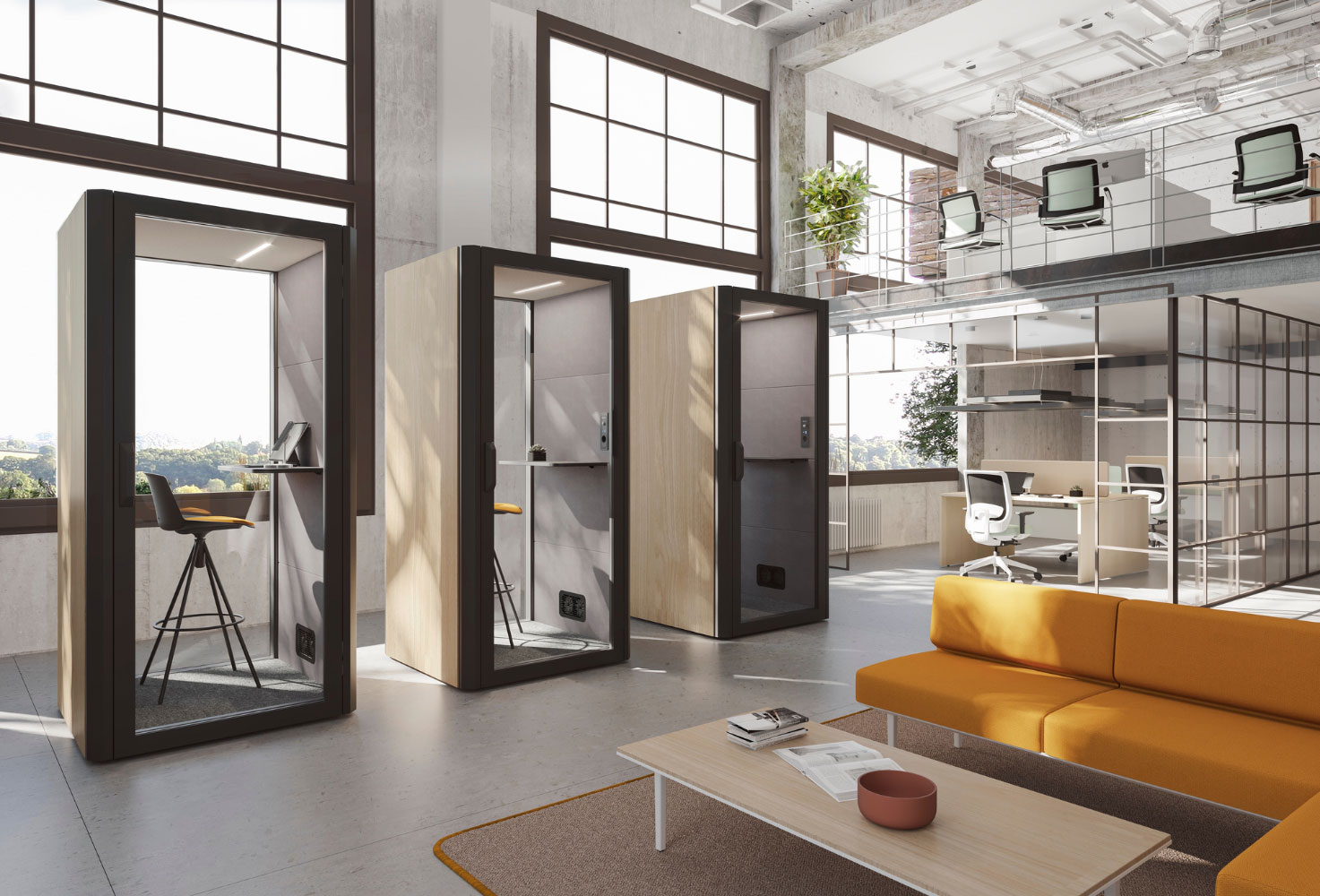
Restoring focus in the office will be crucial to the next generation of workspace design. Rather than large, underused meeting rooms, offices are shifting towards a greater number of smaller, more adaptable spaces. According to Steelcase, small meeting rooms were booked in advance 50% of the time and used on demand the other 50% – underlining their growing importance in the work environment.
Office design is also beginning to include strategies that foster concentration without cutting employees off entirely. In short: privacy, yes – but not at the expense of the collaborative ethos central to today’s office culture. One such strategy is body doubling – the idea that simply having someone else nearby can boost focus and task completion. According to psychologist Ellen Hendriksen, former clinical researcher at Boston University, another person’s presence can create a “support effect” that improves task engagement. From a design perspective, this opens up new spatial typologies – such as quiet libraries or long shared desks – where people can work side by side without needing to interact. Well-designed open spaces can also support this approach, offering enough social stimulation to foster productivity, with features such as acoustic control, clear circulation routes, zoning furniture and visual elements that reduce distractions. However, for this to be truly effective, such environments must be complemented by private areas where employees can retreat when total silence and focus are required.
Ultimately, regaining focus in the office will involve not just physical design changes, but also new organisational norms. Reducing unnecessary meetings, respecting time set aside for individual work and promoting a culture of productivity will be essential if the office is to become an effective working environment once again. Only then can it rival the home – and offer employees the best possible conditions to thrive.
Good lighting and acoustic conditions, well-ventilated spaces with high IAQ (indoor air quality) and environments designed to support concentration.
Including pods, single rooms or semi-open spaces that allow people to withdraw for focused work.
Flashy features with no real functional purpose (such as foosball tables or bistro-style kitchens) are being rejected if they fail to add meaningful value to work performance.
The office of the future must integrate technological solutions that enhance acoustic quality. From noise-cancelling systems and sound-absorbing materials to adaptable furnishings, every element should be designed to balance interaction with the ability to focus.
Layout will play a crucial role – ensuring seamless transitions between collaborative areas and quiet zones, without one disturbing the other.
These wooden structures house private offices and workstations at InMedia Office Space, the headquarters of a Shanghai-based advertising agency. Influenced by the legacy of Shanghai’s alleyways and inspired by the visual vibrancy of small southern European streets, Yatofu Creatives designed the InMedia office with the aim of bringing a sense of community to the workplace.
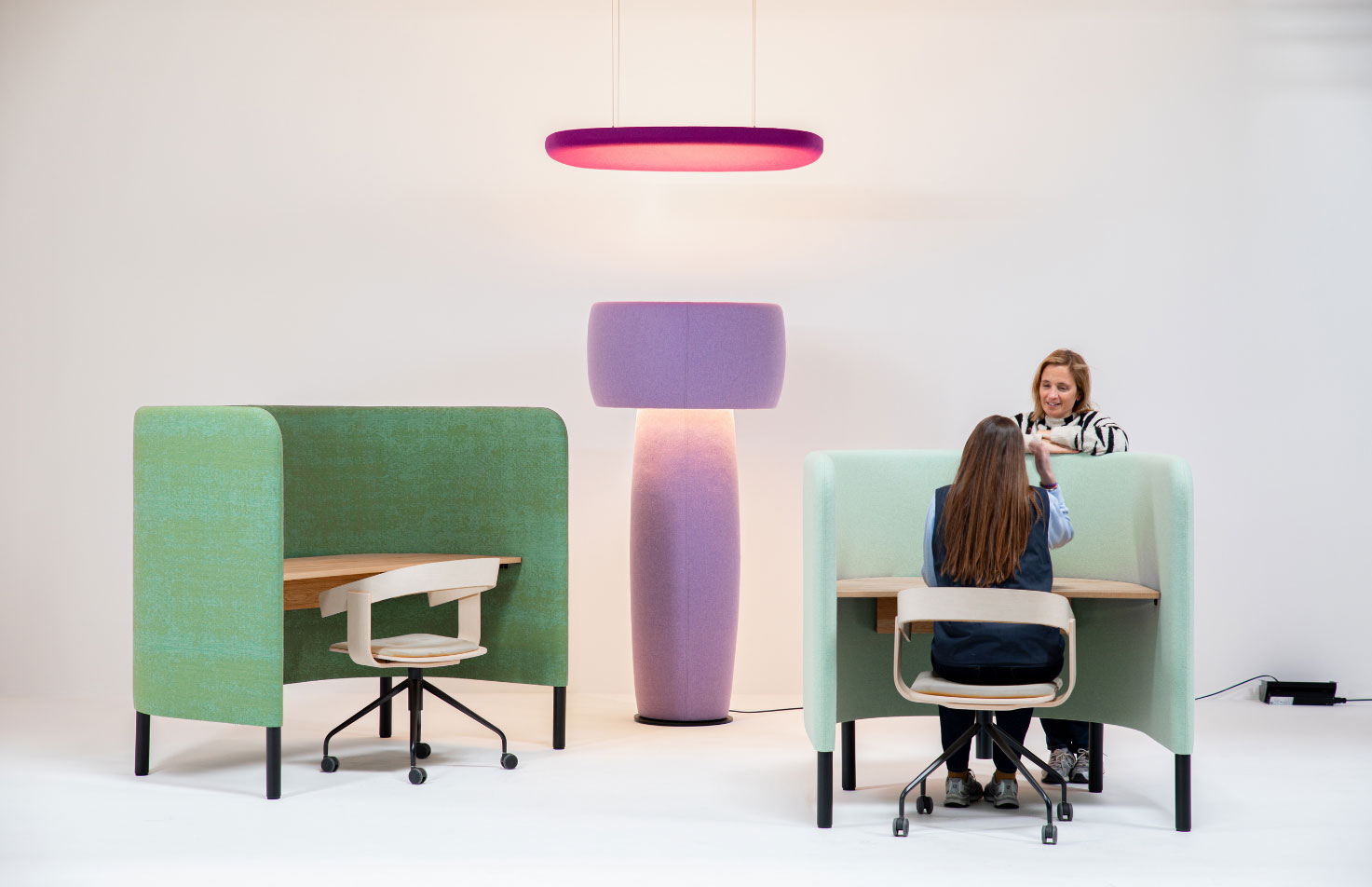
BuzziHug Work by BuzziSpace creates a kind of “refuge”, with padded panels that embrace the desk and also absorb sound.
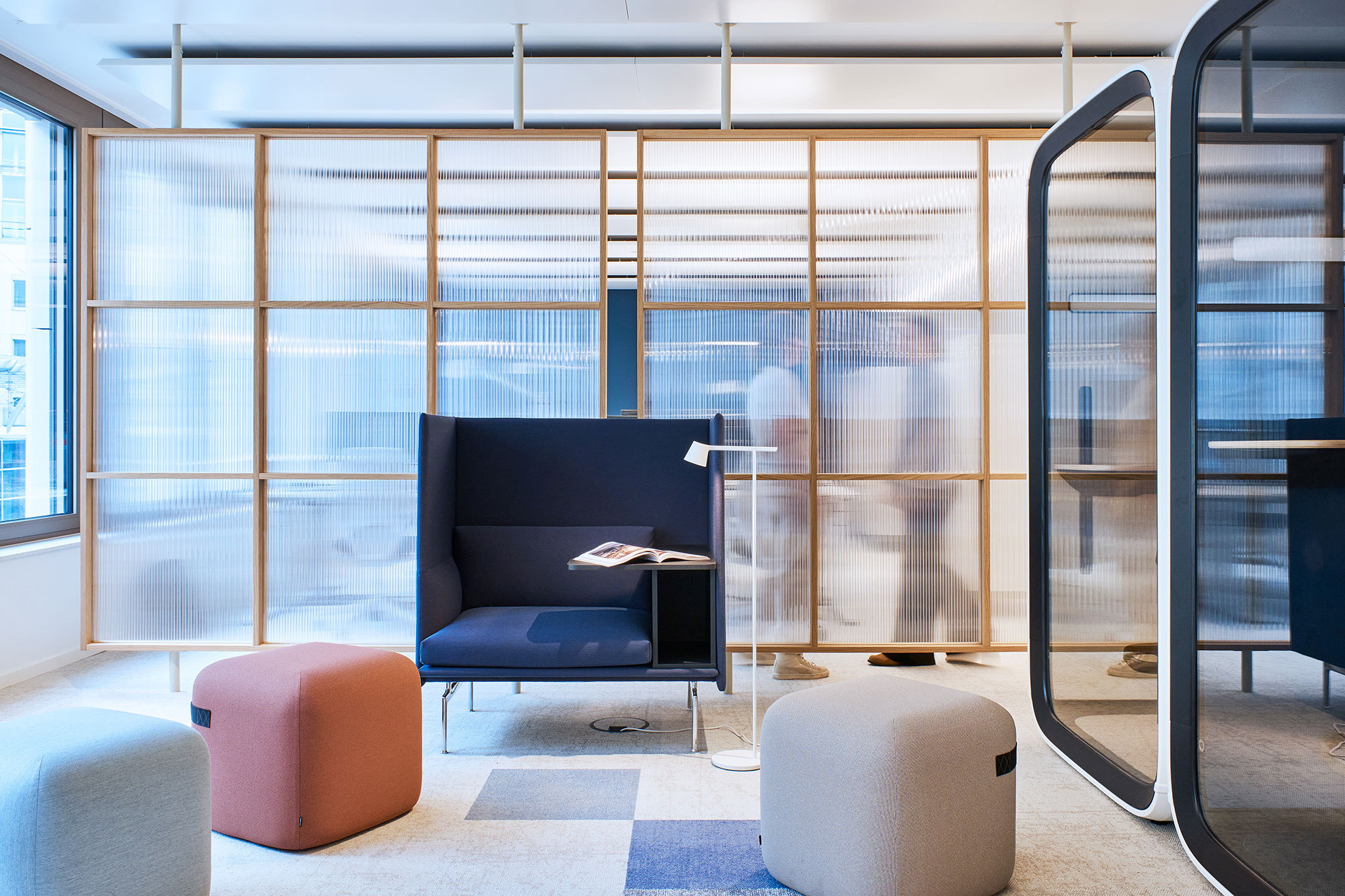
The Burstah Quarter in Hamburg is home to offices, residences and restaurants. Agency IPG Mediabrands has established its new headquarters there, designed by brandherm + krumrey, with a flexible concept that balances focused work with collaboration and informal idea exchange. Inspired by its Frankfurt office, the 3,000 m2 space features an open layout, corporate colours and creative shared areas. “Pixel-like” elements – including furniture, rugs and textile dividers in blue and red – structure the setting. Lighting and natural materials add warmth, fostering a dynamic culture in a space designed for hybrid working.
Photo credit: Joachim Grothus.
The Joyn range of large shared desks by Vitra gave rise to a new office typology that encourages dynamic, spontaneous collaboration.
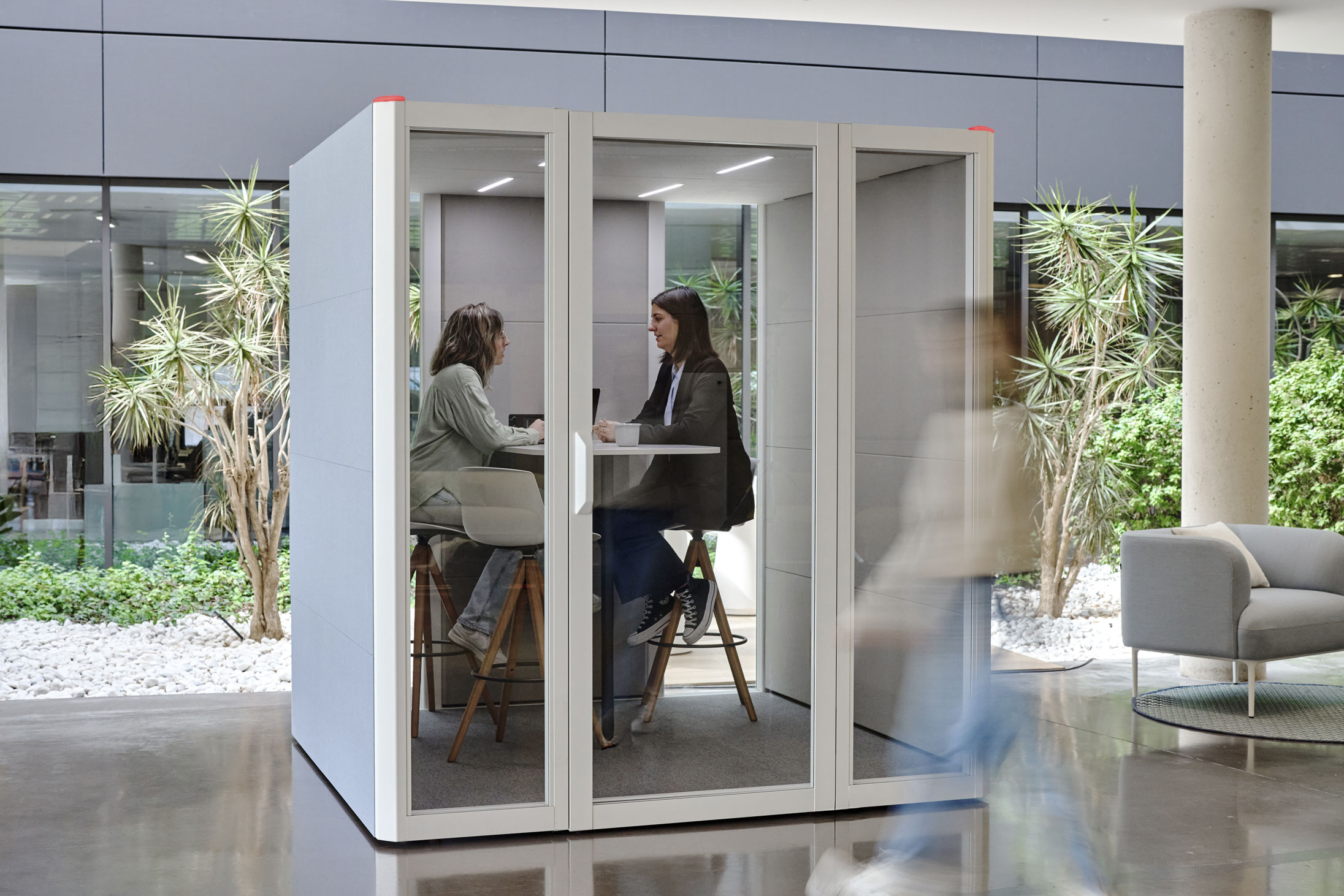
Qyos is a new line of modular, sustainable acoustic pods by Actiu, designed to create islands of privacy in open-plan offices and shared spaces. Qyos is the brand’s first bubble-style pod, designed and developed by its R&D team. It offers ergonomic comfort and meets the specific demand for privacy in shared environments.
