This trend, which prioritises a space’s efficiency, has resulted in the development of living models that combine privacy with shared spaces.
The space available for housing is growing smaller in large cities, with this causing a reduction in the average size of the urban home. In London, the average size of homes is 62.2 m2, and in the technological cen- tre of the Chinese city of Shenzhen the average size is 28 m2 (Source: UK Office for National Statistics and Shenzhen Real Estate Research Center). At the end of 2023, New York gave the green light to a project that will transform 46 office buildings into homes via its ‘Office Conversion Accelerator’ programme, which aims to create 20,000 homes in a decade.
The increase in population density in large cities is causing problems in access to housing. According to a report by the UN-Habitat, more than 1.6 billion people are facing severe difficulties in housing owing to overpopulation, real estate speculation and economic inequality (Source: unhabitat.org). However, at present, some cities have already reached a critical situation. Although the general recommendation is to allocate 30% of income to housing, this percentage is much higher in cities around the world. For example, based on the average rent, in Beijing inhabitants use 122% of their income to pay for housing, which means the population’s level of debt is a significant problem in some urban areas (Source: Global Housing Watch).
“There is a clear trend towards space customisation, both in terms of functionality and aesthetics, turning the home into an extension of our identity. The job of interior designers and architects is increasingly focused on satisfying this need for individualisation, rather than following conventional standards that have prevailed until now.”
María Lozano, TheDreamLab
The return to shared living spaces is evident among people across all demographic groups. In 2022 alone, the coliving sector received €963 million in investments, more than half of the total investment (€1.8 billion) received between 2015 and 2021, which indicates that this movement is still in its initial phases (Source: JLL).
Community spaces are generating a need for private spaces. Bedrooms, which were previously relegated to a function of rest, are today becoming mini-homes within homes. They are highly equipped spaces that offer each inhabitant the intimacy they require. In this vein, there has been a huge evolution in a bedroom’s furnishings as they shift from designs for students to more sophisticated, adult products. For example, the adult bunk bed is one product category experiencing increased growth in recent years.
Simultaneously, there is a growing demand to equip all communal spaces with products inherent to residential environments, but with performance qualities more suited to semi-public or shared use. In the coming years, the evolution of the shared home model will demand new uses of design and ways to distribute the space.
Against a backdrop of growing mobility, products and spaces must be flexible and easily reconditioned. Spaces like the kitchen must be framed in terms of sustainability and transportability.
A study carried out by the furniture company Resource revealed that 91% of clients prefer versatile spaces designed to serve diverse purposes. The trend is less focused on a definitive separation of areas and more on the flexibility of mobile components that can create semi-private areas adapted to different functions.
This is one of the main questions asked of a home and where the most friction is generated. Privacy must be reconsidered within community spaces.
On Etsy, the North-American company focused on e-commerce, searches for room dividers have increased by 134%, with these ranging from fabric curtains to rotating storage units and interior architecture systems.
Strategic implementation of gaps in walls is an innovative way of configuring spaces that materialise or are hidden away.
Work from Anywhere, by Eli Gutiérrez, for the Escenarios de un Futuro Cercano exhibition, is a modular, reconfigurable, sustainable space in every sense, designed to generate a work and residential space where usage is fluid and adaptable.
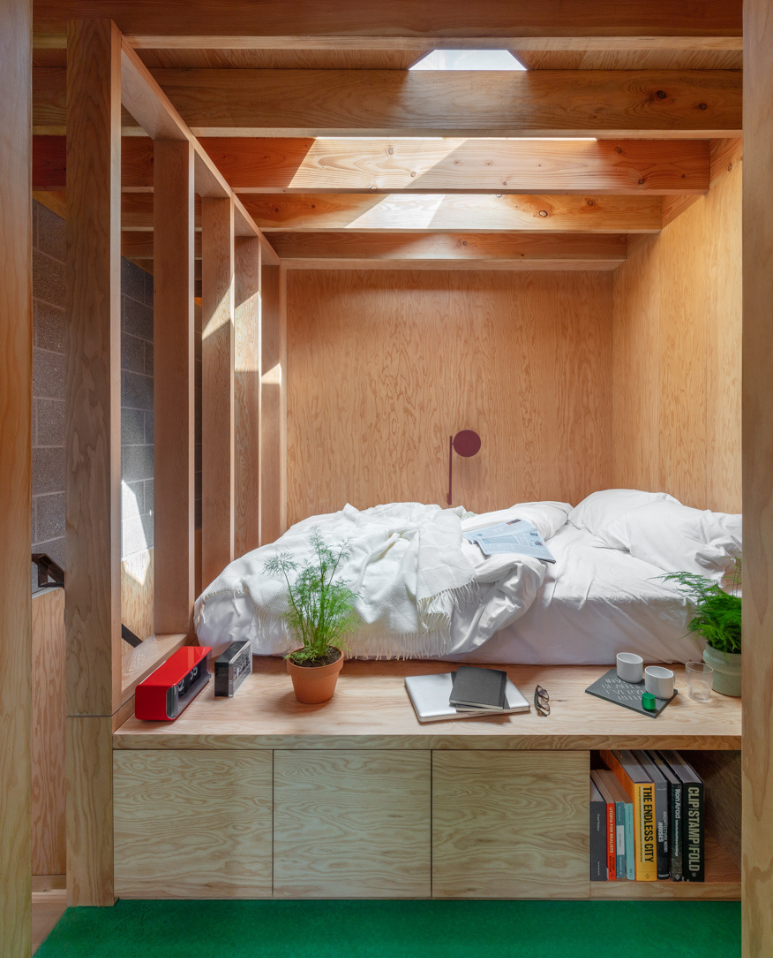
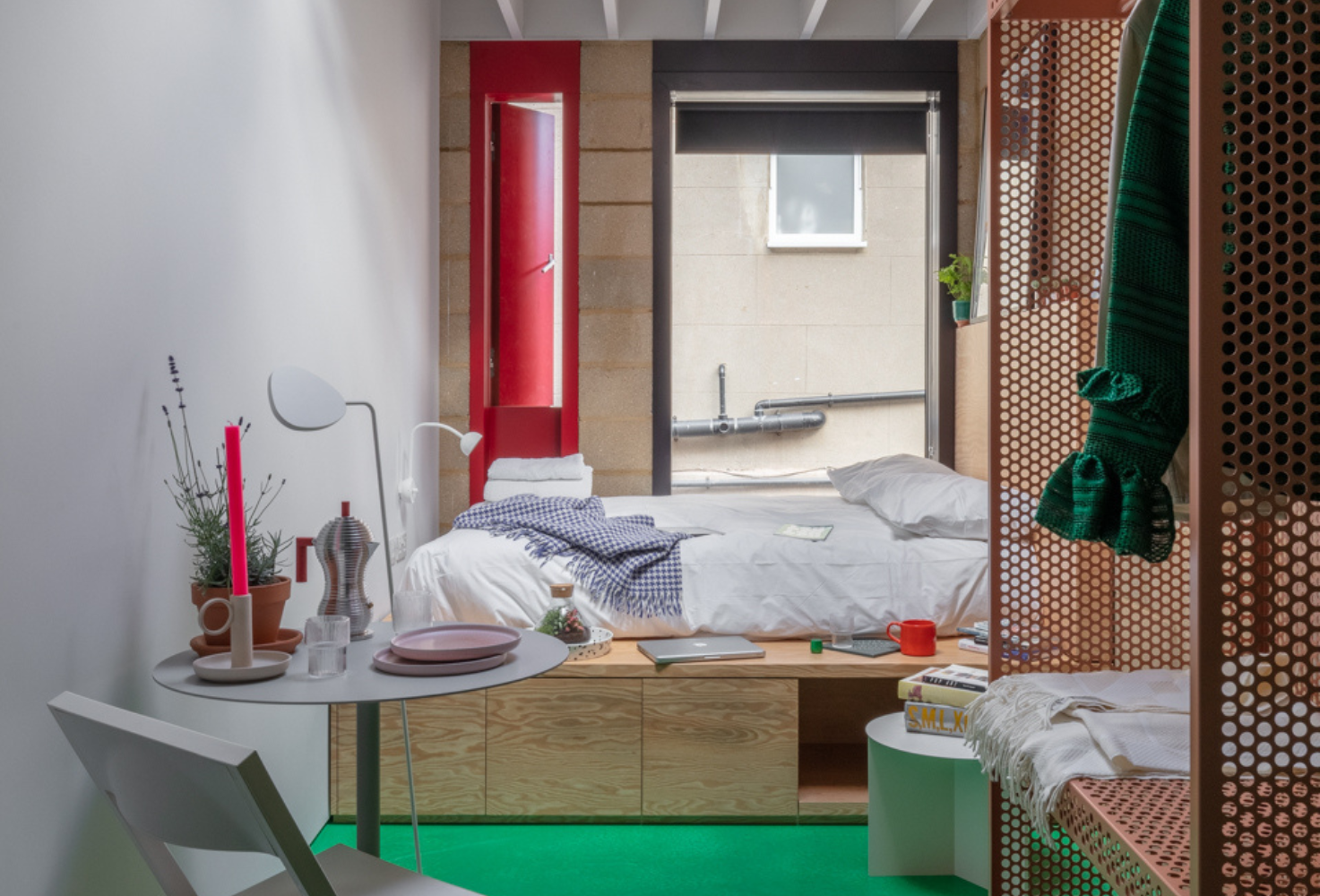
The London coliving space Noiascape makes customised micro-apartments with multi-purpose furnishings, including a platform bed or mobile wardrobe, with colourful, personalised aesthetics.
Credits: Noiascape. Operator and developer: Noiascape. Designers, creative strategy and sales strategy: Noia Studio. Photography: Nicholas Worley
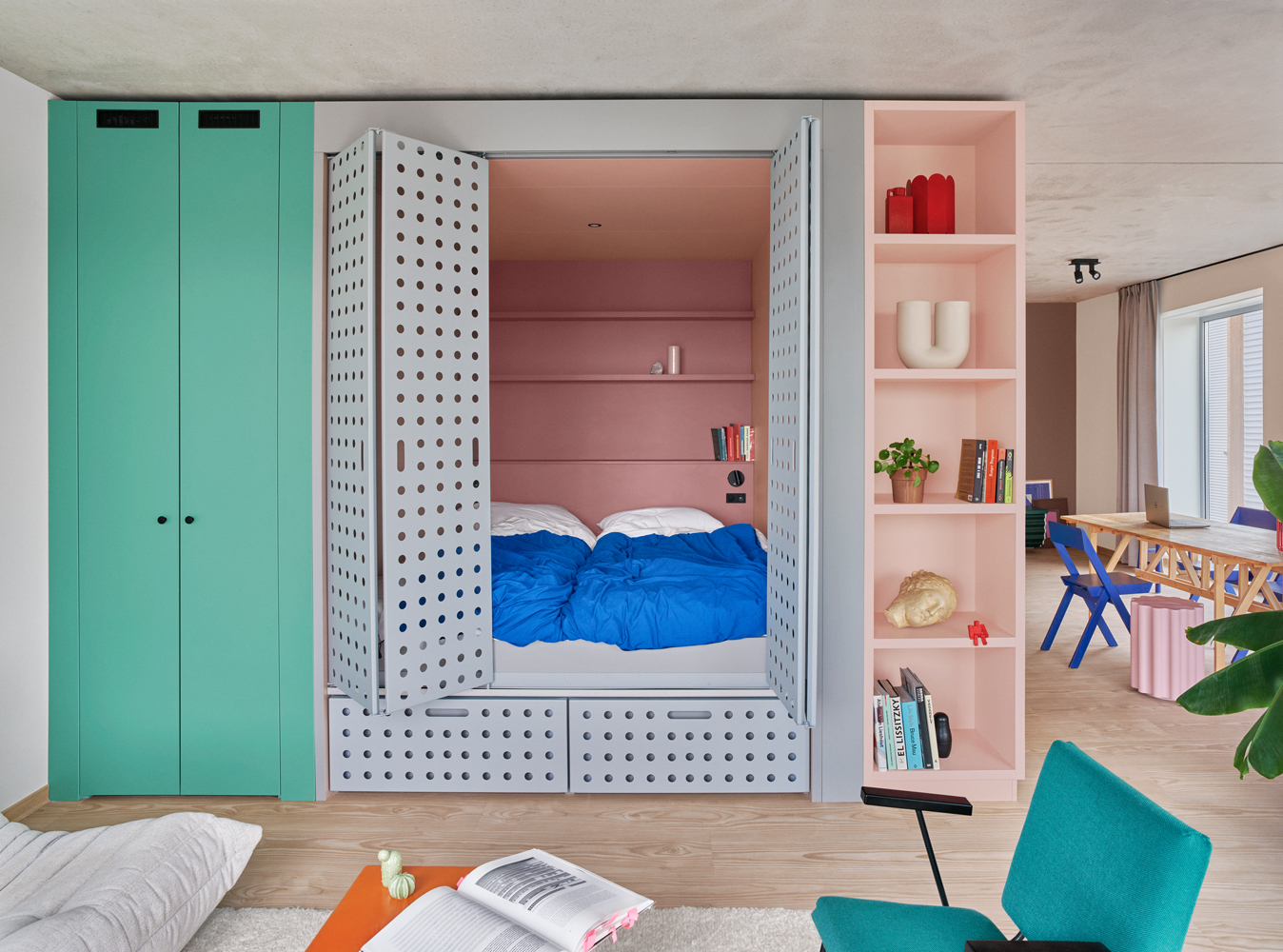
The Dutch studio Shift Architecture Urbanism has created interiors with ‘bedroom-wardrobes’ for the Domūs Houthaven residential complex (Amsterdam).
The complex, which consists of 235 compact rental apartments, was created to offer high-density housing. The individual homes span between 43 m2 and 60 m2, and have modular colour blocks available depending on the building floor. In the heart of each apartment, there is a ‘smart life nucleus’: a central cell with kitchen, bedroom, bathroom and storage space.
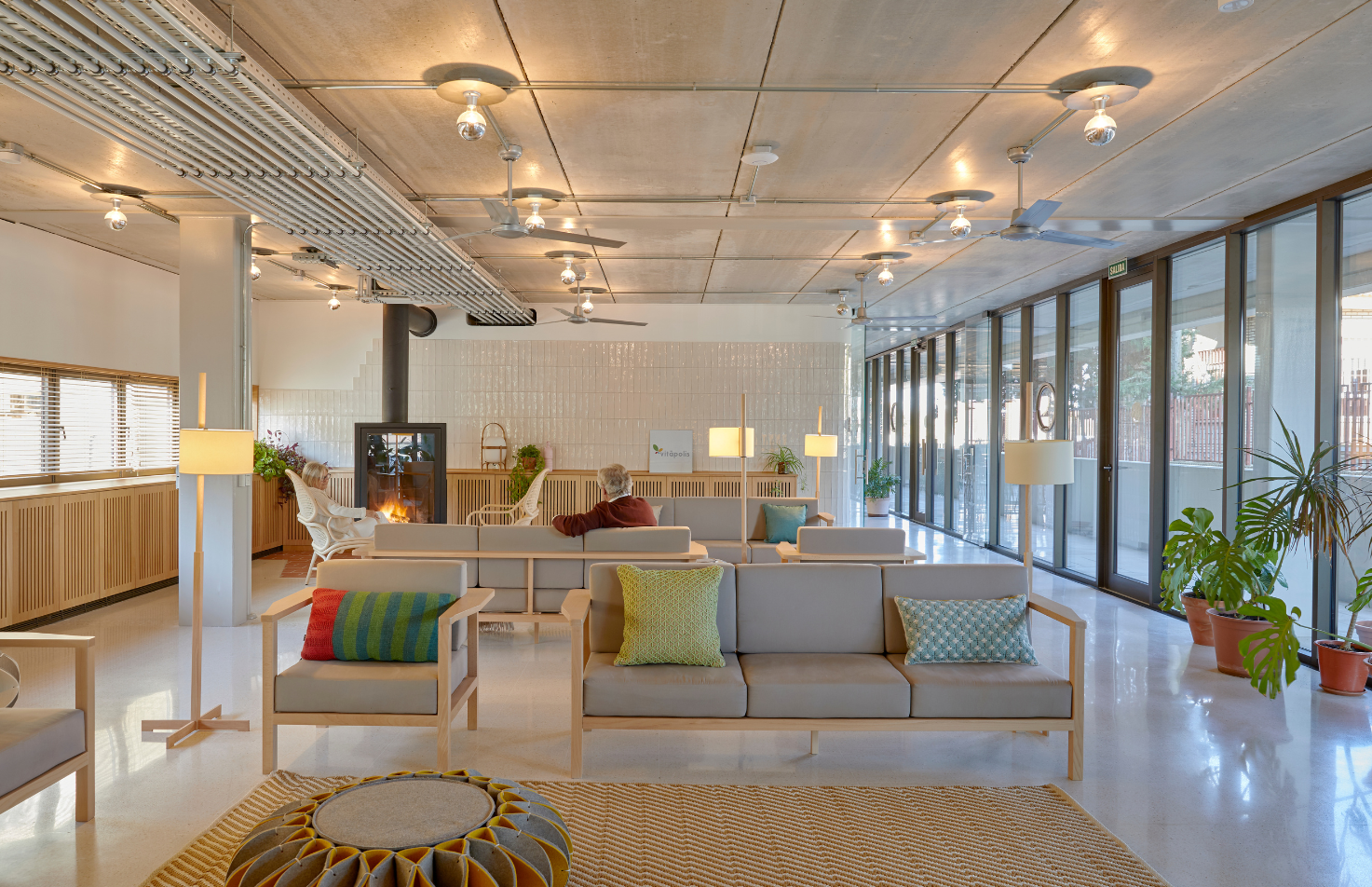
Vitápolis, by Romero & Vallejo, is one of the first cooperative nursing homes in Spain. Located in Toledo, it has 35 independent, completely accessible apartments and more than 1,500 m2 of communal spaces that include a gym, workshop areas, cafeteria, meeting and sitting rooms, gardens, a swimming pool, sports areas and urban gardens. This is a project that aims to respond to new needs, including the social, care-related and emotional needs of this sector of the population.
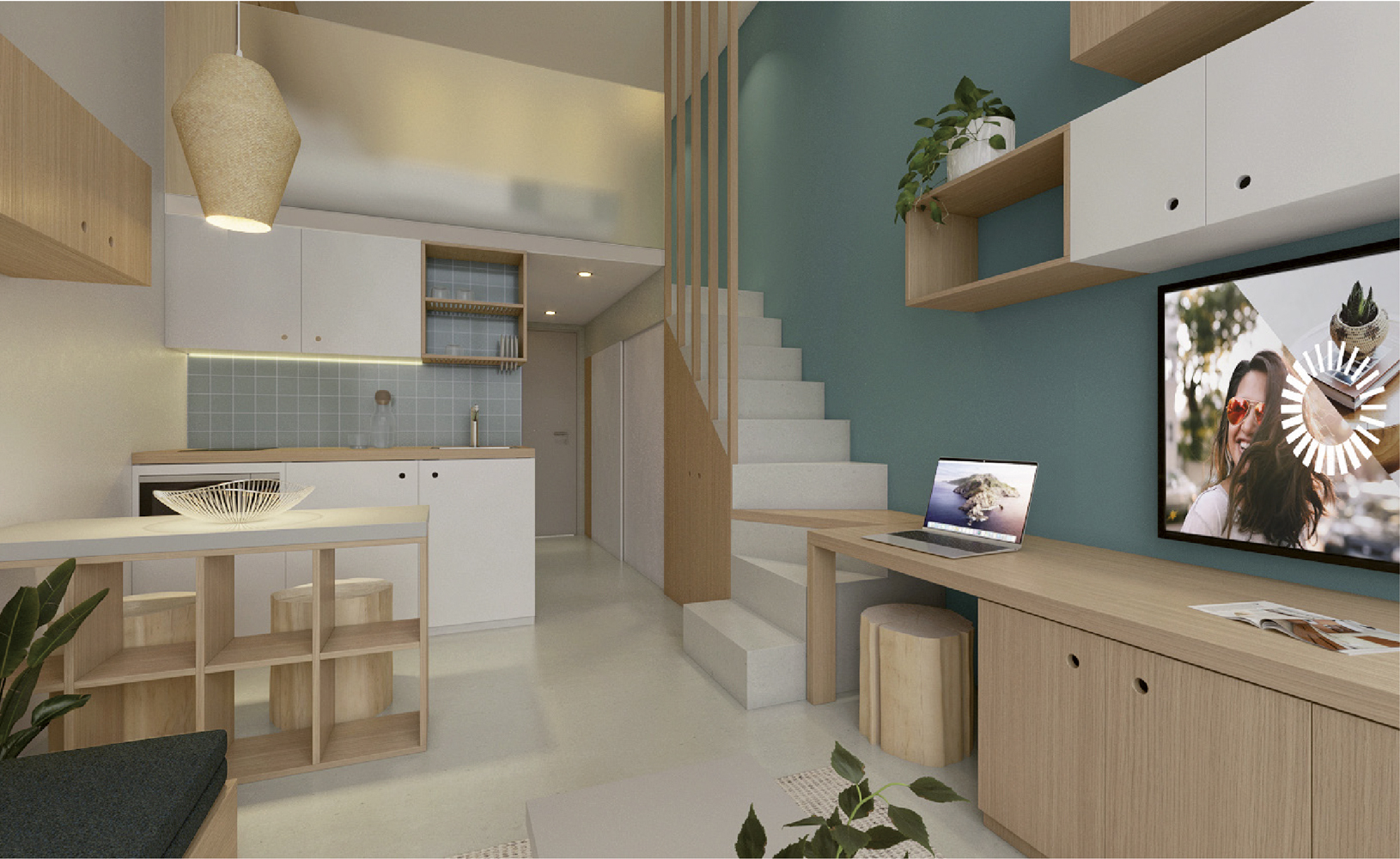
PriestmanGoode worked with Embassy Group to develop Olive, a new brand for the shared housing market in India. The project tackled the social issue presented by the nonexistence of a specific offering of shared homes for millennials, who constitute the country’s largest demographic group, by offering accessible, carefully planned communities for students and young professionals. With the goal of minimising the potential isolation of urban coexistence, this coliving option has shared spaces that include wellness centres, a cinema and an outdoor space.




